


Quick Summary
A nail monomer is the liquid half of an acrylic system, and the right one depends on your skill level, how fast you need to work, and your powder line. Choose a longer working time for detailed nail art and a faster set for busy schedules, and check the ingredient disclosure and safety data sheet before buying.
- Standard Monomer offers extended working time for intricate nail art and precision sculpting.
- Advanced Formula Monomer, priced at $29.99, balances working time for everyday full sets and fills.
- Use the monomer designed for your powder line, since mixing brands can cause lifting or uneven setting.
- Request the safety data sheet and check the named methacrylate, not just the MMA-free label.
- Wear nitrile gloves and ventilate the table, since skin contact is the main route to sensitization.
Table of Contents
- What a Nail Monomer Does in an Acrylic System
- EMA Monomer vs. MMA: What the Ingredient Labels Actually Mean
- Matching Setting Speed and Working Time to Your Workflow
- Best Nail Monomer for Beginners and Learning Technicians
- Can You Use Any Monomer With Any Acrylic Powder?
- Choosing the Best Professional Acrylic Monomer for Salon Use
- Ventilation, Storage and Handling Habits That Protect You and Your Clients
- Your Next Step: Picking a Monomer for Your Next Set
- Frequently Asked Questions
What a Nail Monomer Does in an Acrylic System
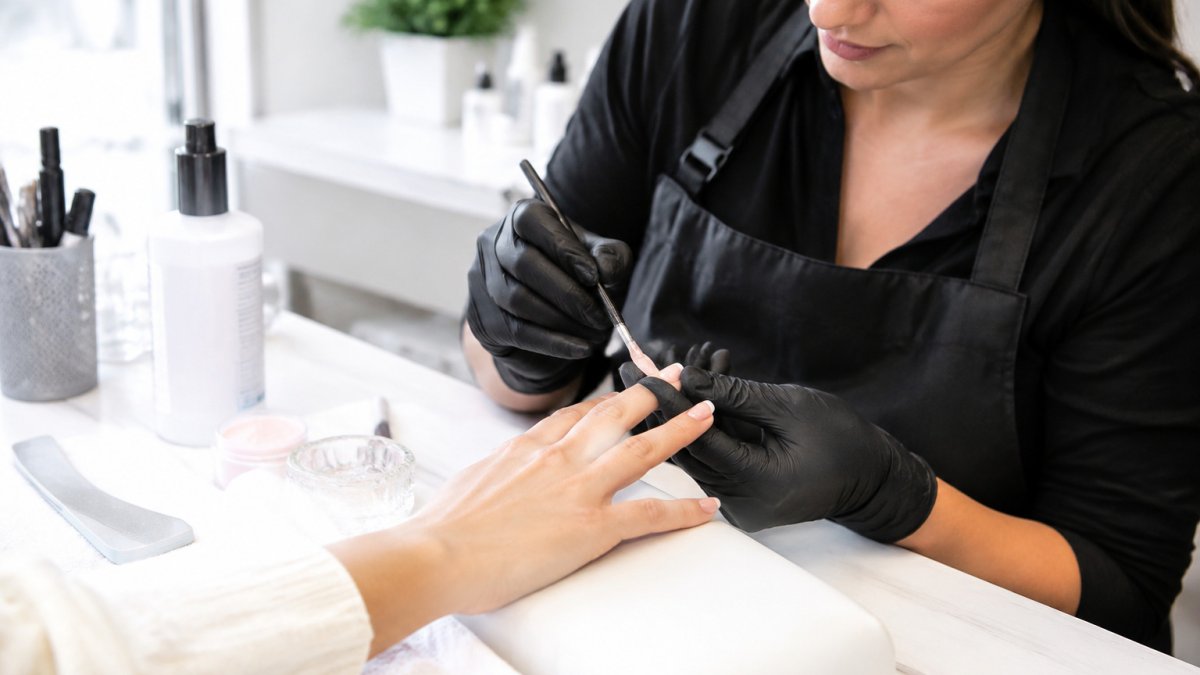
A nail monomer is the liquid half of an acrylic system. When a technician touches the brush to the liquid and then to the powder, the monomer dissolves the polymer bead and begins to harden it into a solid, durable nail. Choosing the right monomer affects how the acrylic sets and how long you have to shape it.
Each JBB Nail'D It monomer is designed to work with a matching acrylic powder line. Keep the working speed you need in mind as you read the rest of this guide.
EMA Monomer vs. MMA: What the Ingredient Labels Actually Mean
Most acrylic nail monomers are built on one of two methacrylate chemistries, and the difference matters for both performance and safety.
EMA (ethyl methacrylate) is a common chemistry in professional acrylic systems. It polymerizes more slowly than MMA, which generally gives technicians a longer working time.
MMA (methyl methacrylate) polymerizes fast and hard, which is why it was once common in the industry. The problem is that MMA is a stronger skin and respiratory sensitizer, and its rapid, exothermic set can damage the natural nail plate. For those reasons, many state cosmetology boards restrict or prohibit MMA in nail products, and the FDA has warned consumers about MMA-containing nail products. FDA consumer update on MMA in nail products
"MMA-free" labeling usually means the product uses EMA or another methacrylate instead of MMA. That claim is a starting point, not a guarantee. A product can be MMA-free and still contain other methacrylates that sensitize some users, and a low-odor product can still contain ingredients you should review. The label claim tells you what is absent; it does not tell you what is present or how the product behaves.
How to evaluate a label and its documentation:
- Read the full ingredient disclosure, not just the front-panel claim. Look for the specific methacrylate named (EMA, HEMA, etc.) rather than a vague "monomer blend."
- Request the safety data sheet (SDS). Under OSHA's Hazard Communication Standard (29 CFR 1900.1200), employers must have SDSs available for hazardous chemicals in the workplace, and the SDS lists the chemical identity, exposure limits, and first-aid measures. OSHA Hazard Communication Standard and SDS requirements
- Check for a batch or lot number and a manufacture date so you can trace a problem back to a specific run.
- Treat odor as a comfort and ventilation issue, not a safety score. A strong odor does not by itself prove a product is unsafe, and a low-odor product is not automatically safer. Judge safety by the disclosed chemistry and the SDS, and judge comfort by how the product behaves in your space.
Watch out: a front-label "MMA-free" claim paired with no ingredient list or SDS is a marketing signal, not documentation. Ask for the paperwork before you commit to a system.
Matching Setting Speed and Working Time to Your Workflow
Working time is how long you can shape the acrylic before it begins to set. Setting time is how long it takes to fully harden. A longer working time gives you more control for detailed art, while a faster set suits a busy schedule.
- Standard Monomer ($15.99): Extended working time for intricate nail art and precision sculpting.
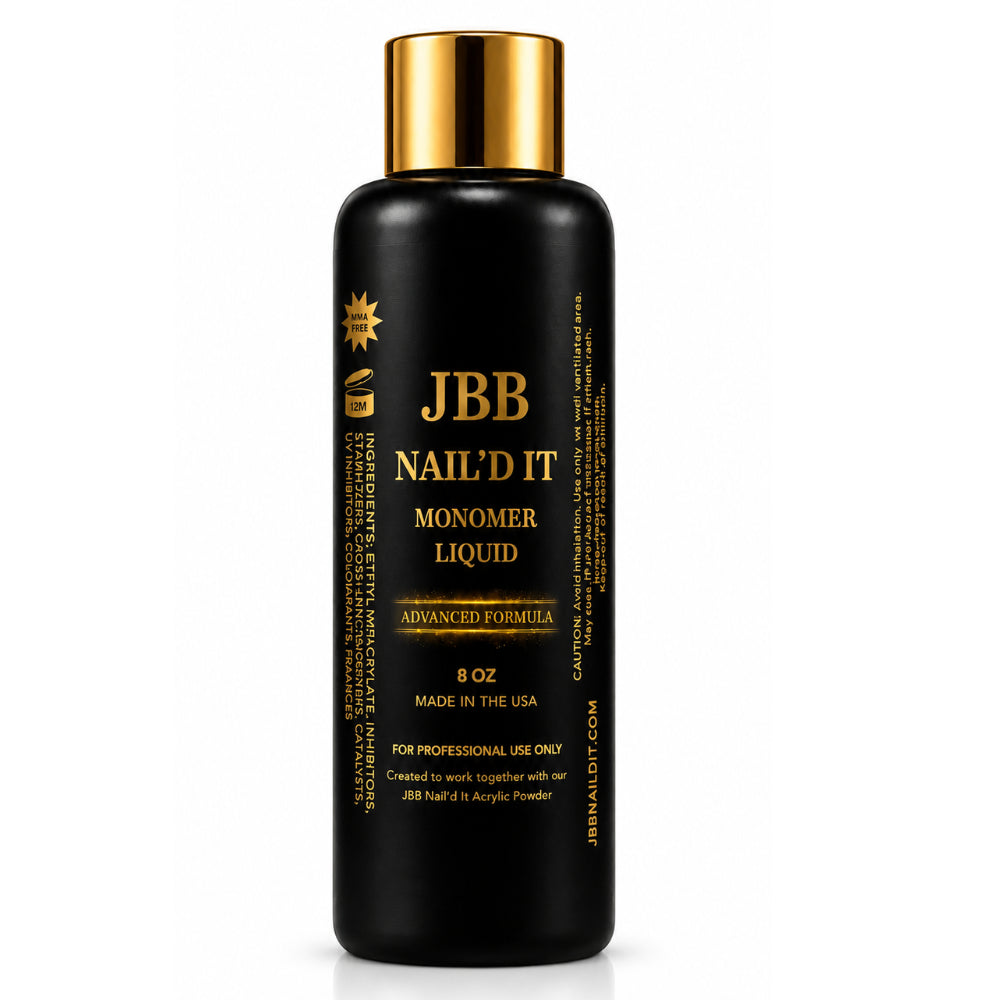
- Advanced Formula Monomer ($29.99): Balanced working time for everyday full sets and fills.
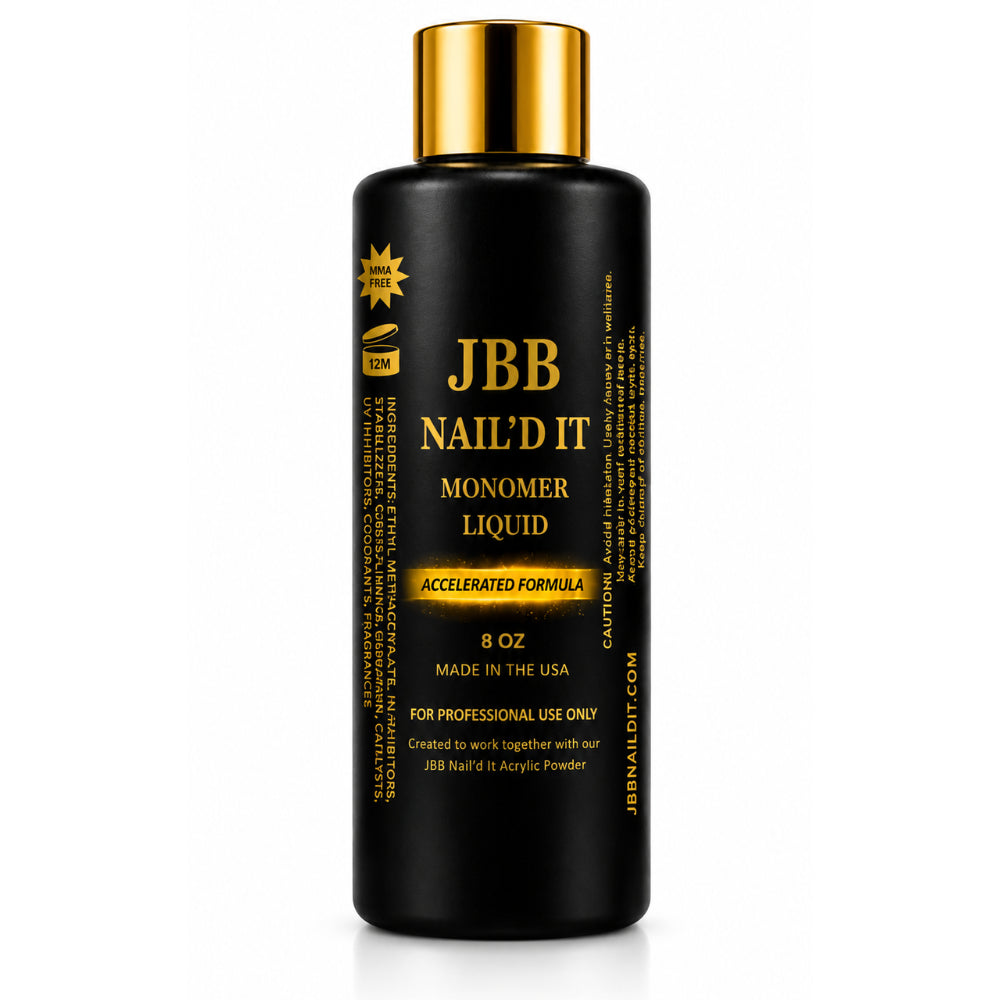
- Accelerated Formula Monomer ($32.99): Rapid working time for busy salon environments and experienced technicians.
Choose the option that matches how you actually work.
The three JBB Nail'D It monomers differ mainly in working time and price, as summarised below. For busy schedules, the Accelerated Formula Monomer offers rapid working time for faster appointments.
| Monomer | Price | Best for |
|---|---|---|
| Standard Monomer | $15.99 | Intricate nail art and precision sculpting |
| Advanced Formula Monomer | $29.99 | Everyday full sets and fills |
| Accelerated Formula Monomer | $32.99 | Busy salon environments and experienced technicians |
Price
Best Nail Monomer for Beginners and Learning Technicians
Beginners usually benefit from a longer working time. It gives you room to correct your bead placement and learn how the acrylic flows. A common mistake is starting with the fastest product to save time, then struggling with bubbles and uneven shaping.
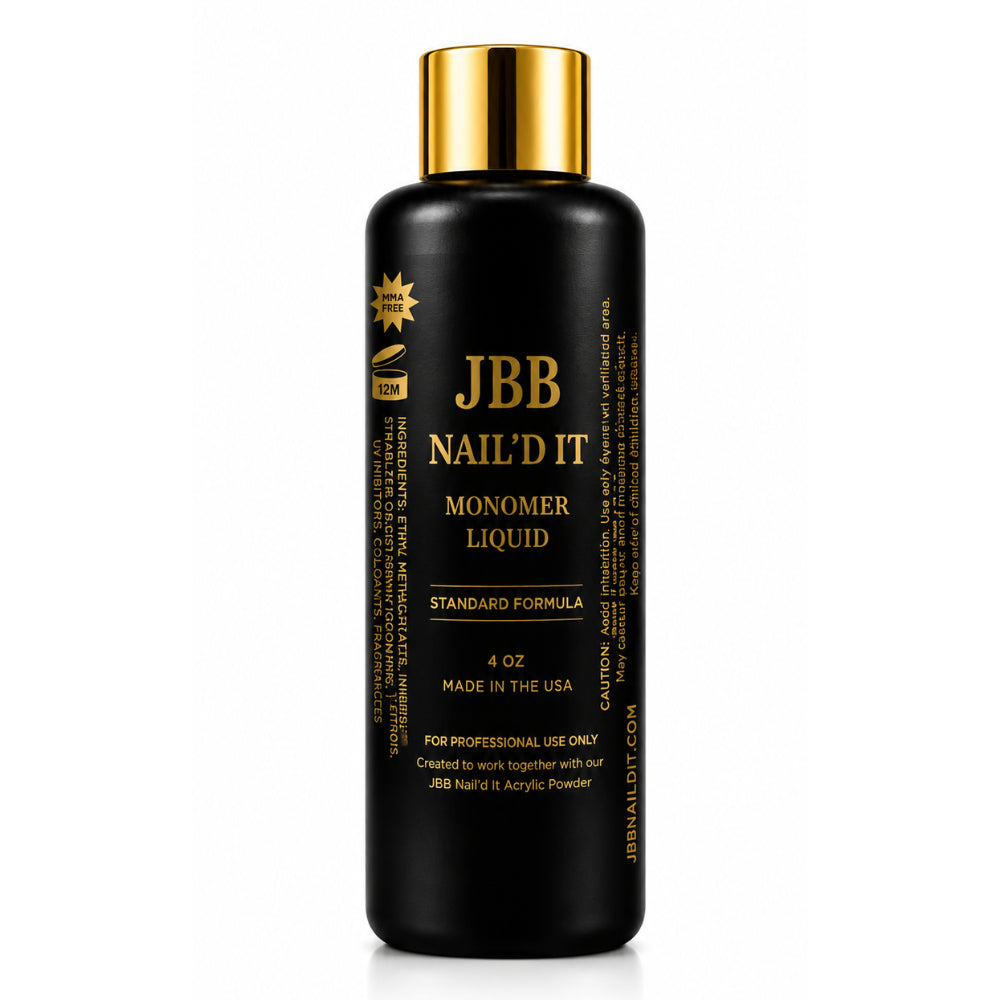
For learning, the JBB Nail'D It Standard Monomer offers extended working time, which gives you more room to practice control. As your speed and confidence grow, the Advanced Formula Monomer is designed for everyday work.
Can You Use Any Monomer With Any Acrylic Powder?
Not reliably. Acrylic monomers and powders are formulated to react together, and mixing brands can change how fast the product sets, how it adheres, and how it holds up. Some combinations work well, while others lift, cloud, or set unevenly.
The safest approach is to use the monomer designed for your powder line. Check the product listings for compatibility before you buy. If you are unsure, test a combination on a practice tip before you use it on a client.
Choosing the Best Professional Acrylic Monomer for Salon Use
Salon use puts different demands on a monomer than home practice does. The Advanced Formula Monomer provides balanced working time for everyday salon sets. You need consistent performance across many clients, dependable working time, and a product that pairs well with your powder. If you go through a lot of product, buying a matched set can also simplify ordering. The Pro Pack bundles powder and monomer together in volume.
Ventilation, Storage and Handling Habits That Protect You and Your Clients
This section covers practical steps for ventilation, skin contact, storage, and contamination.
Ventilation.
- Use a local exhaust source at the table, such as a downdraft or table-top capture unit, rather than relying on a ceiling fan alone.
- If you rely on general ventilation, open a window and run an exhaust fan that pulls air away from the work area, not toward the client.
- Keep the monomer bottle capped between beads. An open bottle is a continuous vapor source.
- Schedule the highest-volume work in the best-ventilated part of the day, and give the room time to clear between clients.
Skin contact and sensitization. Repeated skin contact with uncured monomer is the main route to allergic contact dermatitis, and once sensitized, a technician may react to even small exposures. CDC/NIOSH guidance on nail salon worker safety
- Wear nitrile gloves, not latex, and change them when they become contaminated with monomer.
- Avoid skin contact with wet beads; use a proper dappen dish and brush rather than fingers.
- Wash hands with soap and water after handling, and use a barrier cream if you have dry or cracked skin.
- Watch out: a technician who develops itching, redness, or peeling on the fingertips should stop handling uncured monomer and seek medical advice before continuing.
Storage. Store monomer in a tightly closed, original labeled container away from heat, sparks, and direct sunlight. Keep it out of reach of clients and children, and do not decant it into unlabeled bottles. Follow the SDS for the specific product's storage guidance.
Contamination and shelf life. Monomer degrades and absorbs moisture over time, and contaminated monomer causes cloudy beads, slow sets, and lifting.
- Keep the dappen dish covered when not in use and replace monomer that has become cloudy, discolored, or thickened.
- Do not pour used monomer back into the stock bottle.
- Date the bottle when you open it, and rotate stock so older product is used first.
- A common pattern is that a bottle left open for weeks sets more slowly and yellows more readily; if performance drops, replace the bottle before blaming the powder.
Troubleshooting application problems. Handling habits and product condition show up in the finished set. If you see lifting at the sidewalls, check for contaminated monomer, moisture on the nail plate, or a powder/liquid mismatch. If you see bubbles, check bead ratio and whether the monomer has thickened. If the product sets before you can shape it, check room temperature and whether you are using a fast-set formula in a warm room. Diagnosing the result is often faster than switching products.
Your Next Step: Picking a Monomer for Your Next Set
Start by matching the monomer to your skill level, your working speed, and your powder line. Decide whether you need extra time for detailed art or faster setting for a busy schedule. Then check the ingredient disclosure and handling guidance before you order.
Ready to find your match? Shop the JBB Nail'D It monomer collection and pick the working time that fits how you work.
Frequently Asked Questions
What is the best monomer to use for nails?
There is no single best monomer for every technician. The right choice depends on your skill level, how fast you work, the room you are working in, and which acrylic powder you already use. Choose a monomer from the same system as your powder, or one the powder maker lists as compatible. For most everyday full sets, a balanced formula like the JBB Nail'D It Advanced Formula Monomer at $29.99 suits working time that allows steady bead control without rushing. Experienced technicians in busy salons may prefer the Accelerated Formula Monomer at $32.99 for faster service.
Should I use EMA or MMA monomer?
Check the ingredient disclosure on the product label or its safety data sheet rather than relying on marketing terms. Ingredient disclosures and safety data sheets show which methacrylate a product contains, and MMA is associated with stronger hazards. Odor is not a reliable safety measure on its own. Whichever type you choose, work with good ventilation, avoid skin contact, and store the bottle tightly closed away from heat.
Can I use any monomer with any acrylic powder?
Not safely or reliably. Acrylic monomer and powder are formulated to react together, and mixing brands can change setting speed, bead consistency, adhesion and durability. Mismatched products can cause lifting, bubbles, poor bead control or premature setting. Confirm compatibility with the powder manufacturer before combining products, and test a few practice nails before doing a client set.
What should beginners look for in nail monomer?
Beginners benefit from a monomer with a moderate working time, which gives you enough room to place and shape each bead without the acrylic hardening too quickly. The JBB Nail'D It Standard Monomer at $15.99 offers extended working time for precise sculpting and is a practical starting point for learning. Check the compatibility guidance for your powder, and practice on tips before working on clients.
